Rural EMS in Canada lives with distance. Hours between communities, winter roads that vanish in April and return when the lakes freeze, sparse staffing that relies on volunteers who also run farms or fishboats. Training has to fit into that context. It must be portable, resilient, and precise enough to build real skill, not just familiarity. The equipment also has to cross the country in a Pelican case and still work after a flight on a Twin Otter or a run up the Alaska Highway in January.
I have trained responders in school gyms, fire halls, nursing stations, and church basements from the Prairies to the North Shore of the St. Lawrence. The same hard truths show up everywhere. Crews have limited time together. Power outlets might be an extension cord away. Internet is a maybe. Everyone needs hands on practice that feels like a real patient, then feedback that is blunt and useful. Prestan and Laerdal have become the default names we reach for because they check those boxes with different strengths. If you put the right combination of their gear on the floor, rural teams get better quickly and the improvements stick.
The realities of distance and time
It helps to visualize the training calendar as it lives on the ground. In a community that runs two ambulances, one staffed and one staffed when they can muster a second crew, the training window is often a weekday evening after work. You get ninety minutes before people need to head back to family or the night shift. Snow may be blowing outside. The instructor might have driven three hours. If a call comes in, half the room will disappear, then wander back later to finish compressions. That is normal, not a failure.
On the North Shore one winter, we were practicing pediatric bag valve mask ventilation. The wind rattled the siding of the hall, and the temperature dropped fast when someone opened the door. We had a Little Anne QCPR, a Prestan Infant with feedback, and a Laerdal pediatric airway trainer. When the tones sounded, we covered the airway head with a clean towel, clicked off the feedback modules, and the few who remained kept practicing while the pager traffic crackled. If the gear had needed ten minutes CPR training manikins to warm up or a laptop to boot, the session would have died.
Portability and fast setup are not conveniences in this context. They are prerequisites for any serious plan to keep skills sharp.
What portable simulation should deliver in rural Canada
Compact kit that fits in a hatchback does not earn its keep unless it translates into better patient care. That requires a few things. The tactile feel of chest recoil and airway resistance must be believable so learners build the right muscle memory. Feedback has to be immediate, clear, and merciless, because most rural providers will not have another supervised practice for weeks. The equipment must teach the basics relentlessly, and it should support growth to advanced skills as the team matures.
Medical simulation equipment Canada buyers also weigh durability and serviceability more heavily than their urban counterparts. A cracked manikin chest plate is not a minor inconvenience when the nearest distributor is a flight away. Consumables need to be affordable and available in country. Batteries should be standard sizes you can buy at a Co-op. Cases must shrug off salt spray and gravel roads. Warranties and tech support have to be reachable in the same time zone. Those practicalities decide whether a program can run through the winter and into the next budget cycle.
Prestan in the field: reliable CPR repetitions with smart feedback
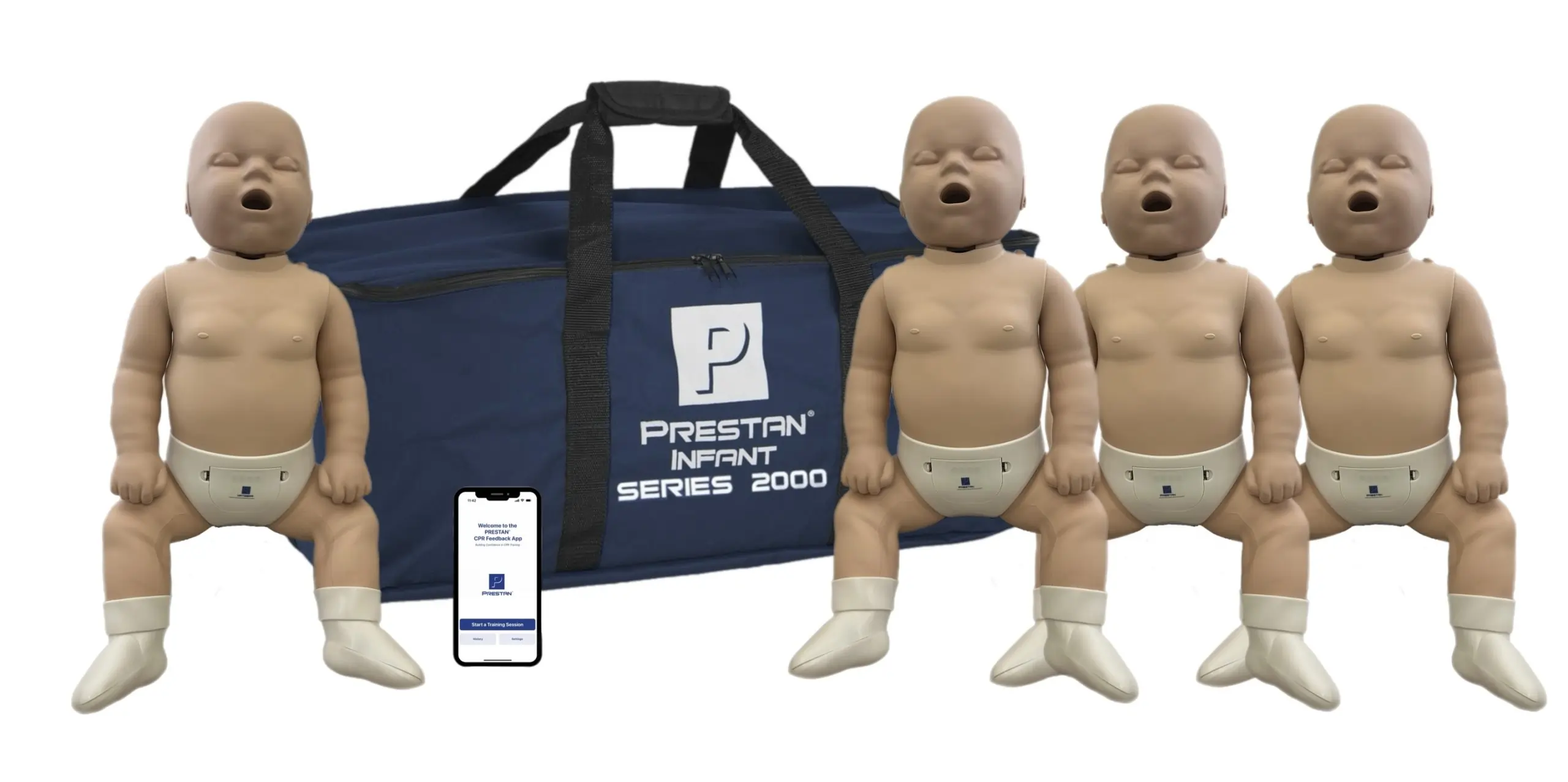
The Prestan brand built its reputation on approachable, durable CPR manikins that travel well and stand up to abuse. That matters when a set lives in the back of a duty truck and comes out in different rooms every month. With Prestan CPR manikins Canada programs can cover large territories because the kits carry light and set up fast.
The Adult, Professional Adult, and Infant series each provide clear chest rise when ventilated correctly and a distinctive click at the proper compression depth. The visual feedback modules use simple lights to report compression rate and depth, which means learners do not get lost in app menus or chase a Wi-Fi signal that is not there. In small stations, that simplicity lets a single instructor keep an eye on four learners at once and intervene quickly.
Cost and weight are often the first two questions I hear from rural chiefs. Prestan scores well on both. A four pack of Ultralite adults in a wheeled bag is a common choice when agencies run community CPR or need to rotate practice kits among satellite bases. The torsos nest together and the whole set can ride in a staff SUV without eating all the cargo space. A single person can carry it up a school staircase without risking a back strain.
The trade-off with Prestan is fidelity. While the compression feel is consistent and the feedback honest, you will not mistake a Prestan torso for a human chest in the way a high-fidelity unit can simulate variable compliance. For most rural training goals, that is the right compromise. Over hundreds of sessions, I have watched crews drive their compression fraction and ventilation timing into the sweet spot with Prestan gear. When we later step up to more advanced simulation, their basics stay tight.
Prestan also earned trust with straightforward maintenance. Chest skins are easy to replace, the lungs swap quickly, and you can clean surfaces with common disinfectants as long as you avoid harsh solvents. Replacement parts ship readily from Canadian distributors, so you are not waiting on cross border logistics during a holiday week. That reliability keeps instructors from hedging their plans because of a damaged manikin.
Laerdal on the move: QCPR precision and airway depth
Laerdal has a deep bench. At the high end, the company’s SimMan family does remarkable things. Those systems are not what most rural crews can or should haul to a winter training night. Where Laerdal shines for mobile work is in the QCPR line and in its airway trainers. With Laerdal manikins Canada teams can scale from foundational CPR to realistic airway practice without changing brands or training philosophy.
The Little Anne and Resusci Anne QCPR units give quantifiable feedback that can sync to simple apps. When we have solid cell service or a hotspot, the group display turns a room into a friendly competition. Compression depth, rate, hand position, and ventilation volume show up as clean numbers. When we do not have reliable connectivity, the manikin still reports key metrics with onboard indicators, and we record scores manually to track progress over time.
Resusci Baby QCPR, in particular, has changed how we teach neonatal and infant care in remote communities. The sensitivity to head position and ventilation volumes shows learners immediately when they are overzealous. In one northern session, a senior volunteer who had delivered two babies in the community realized she had been bagging too hard for years. Her face fell, then she squared up and made adjustments within minutes. That kind of rapid course correction is gold.
For airway work, Laerdal’s Airway Management Trainer and related heads let teams practice basic airway maneuvers, supraglottic device placement, and endotracheal intubation in a package that can ride in a single case. The airway behaves like a human’s in the ways that matter for learning. You can feel the epiglottis with a blade, hit teeth and reassess, or seat an i-gel and confirm chest rise. Airway training manikins Canada buyers often underestimate how powerful it is to decouple airway skill acquisition from the full-body simulators. In small rooms, having an airway head on a bench where two learners can rotate in and out keeps everyone engaged and reduces setup complexity.
Where Laerdal asks more of the instructor is in upkeep and calibration. QCPR units benefit from proper charging routines and periodic firmware attention. Airway heads need more careful cleaning to protect internal structures and to keep articulation smooth. It is not onerous, but it does require a short checklist and a case with the right wipes and lubricants. When managed well, the payoff is high fidelity where it matters without dragging a full sim lab into a rural hall.
Choosing fidelity that fits the job
Not every skill needs high fidelity. In a community where real cardiac arrests number in the single digits per year, mastery of compressions and basic airway control will save more lives than mastery of rare procedures. High-fidelity CPR manikins create believable resistance and provide rich data, but they also cost more and weigh more. The instructor effort climbs too. Balance the investment against the call profile.
For most rural systems, we aim at a blended approach. Keep a small fleet of durable, travel ready CPR torsos for regular mass practice and community outreach. Layer in two or three QCPR units to push precision and to quantify improvement for quality assurance. Add an airway head that can ride shotgun in any vehicle and that comes out for targeted practice or for scenario days. That mix covers the common needs and still allows for advanced work on planned training days.
The temptation to buy one high-end simulator and declare victory is real, especially when grants come through. Resist it unless you have a maintenance plan, stable power in your training spaces, and instructors who can commit the time. A five figure mannequin that lives in a closet helps no one. The energy behind a rural program must go toward hands on repetitions that teach the basics relentlessly.
A compact, mobile kit that works across provinces
When we build a go-bag for instructors who travel, we keep the footprint small and the options broad. A kit that has supported dozens of sessions in northern and coastal communities looks like this:
- Two Prestan Adult Professional torsos with feedback modules One Prestan Infant with feedback One Laerdal Little Anne QCPR, with spare batteries and the app loaded on a tablet One Laerdal Airway Management Trainer head, with assorted supraglottic devices and a basic intubation set A pouch with lungs, face shields, nitrile gloves, alcohol free wipes, a pump bottle of neutral cleaner, and extra AA batteries
Packed in two cases, that setup rides easily, fits in a bush plane’s rear compartment, and gives an instructor the ability to run parallel stations. If we know we will have stable power and projector access, we add a second QCPR torso and a small Bluetooth speaker to let the metronome cues carry without shouting.
How the brands complement each other in practice
I have trained side by side with instructors who prefer to stick with one brand for everything. There is comfort in consistency, but it can cost you flexibility. Prestan’s light weight and quick setup make it the backbone of large format practice, especially when we are running a dozen learners through a tight schedule. The crews crank through compressions, get clean rate and depth cues, and the instructor keeps moving. Laerdal’s QCPR steps in when we want detailed feedback that we can track over months. The airway head lets us isolate techniques that are hard to correct on a full body figure.
The synergy shows up in retention data. A volunteer group in central Saskatchewan ran monthly sessions for six months with a mix like the kit above. Compression depth and fraction improved early and stayed high with Prestan reps. When we layered in QCPR data every second month, ventilation volumes tightened and hand placement errors dropped. We saw fewer overventilation cases on post training run reviews, and the crews reported more confidence when working with fire first responders in tiny houses where space to kneel is tight.
Running meaningful scenarios in small rooms
Equipment never creates realism by itself. You get realism by shaping the room and the scenario to match what crews face. In small halls or clinics, we push tables aside and build cramped spaces. We put the airway head on a bench to simulate the back of an ambulance. We set the QCPR torso on a yoga mat to mimic a living room carpet. If we have a working stairwell, we run a carry down with the manikin torso braced in a blanket.
Time discipline matters. A rural cardiac arrest often involves a long response and a long transport. Practice that duration. Set a timer for twenty minutes of compressions before the first rhythm check, then rotate compressors every two minutes. Change out BVM operators and enforce a rate of ten breaths per minute for an intubated patient. Without that pressure, people unconsciously speed up ventilations. With it, they learn to breathe with the metronome and to read the chest rise instead of the urge to squeeze.
Debriefs should be short, specific, and data rich. QCPR reports give you numbers to ground the conversation. When we lack the app, we capture rate and depth qualitatively and we record key errors on a whiteboard. That running ledger becomes a story of progress across sessions, and it motivates volunteers who might otherwise feel like each training night stands alone.
Winter, cleaning, and the stubborn realities of climate
Cold does odd things to plastics and batteries. Gear that rides in a garage or truck through a Prairie winter needs ten minutes to come to room temperature before you start. If you rush, compression plates feel stiffer than designed and battery indicators will lie. Keep a small space heater in your kit for truly cold rooms. It can save a session.
Cleaning is a place where programs quietly bleed money. Do not overcomplicate it. Follow the manufacturer’s lists. Alcohol free disinfectant wipes preserve manikin skins, and a diluted neutral cleaner removes grime without weakening adhesives. Replace lungs and valves at the intervals you set, and log it. In rural clinics and nursing stations, infection control officers often appreciate seeing a laminated, dated chart for consumable changes. It reassures them that community training will not compromise patient areas.
Store airway heads with a light coat of the recommended lubricant on articulating joints. Keep blades and stylets capped to protect the airway surfaces. If you teach needle cricothyrotomy or surgical airway on animal tissue, do it outside or on a plastic tarp. The smells linger and you will find bits of tissue days later if you do not control the mess. Many rural halls double as community spaces, so leave the room cleaner than you found it.
Procurement and support inside Canada
Agencies that operate far from major centres need clear supply lines. When budgeting, choose models with parts and consumables reliably sourced through Canadian distributors. Prestan CPR manikins Canada orders generally arrive within one to two weeks, and the accessories like lungs and face shields are widely stocked. Laerdal manikins Canada distributors support QCPR components and airway trainer parts with established channels and bilingual documentation. Lead times for specialty parts can stretch, especially during fiscal year ends when everyone buys at once. Build a buffer into your consumables and spare parts inventory rather than counting on just in time deliveries.
Warranties and service matter. Document serial numbers and purchase dates in a shared file. When something fails, good vendors will often ship a loaner if you can cite the warranty and describe the fault clearly. Photos help. Rural programs live or die on relationships, so treat your distributor rep like a partner. A ten minute conversation in October can solve a February crisis when your winter training calendar is full and a manikin needs attention.
Funding often arrives in irregular waves. Federal and provincial grants, municipal budgets, and community fundraising rarely align. Choose scalable kits that allow phased growth so each tranche of funds adds capability without creating stranded assets. A first phase might be two Prestan adults and an infant. A second phase adds a Laerdal QCPR unit and an airway head. A third adds a second QCPR or pediatric capability. That path keeps training effective at each step.
Measuring what matters and proving retention
Data helps rural leaders defend training time against the constant pull of operations. QCPR reports, skill checkoffs, and simple tally sheets turn anecdotes into evidence. Aim to measure compression fraction, depth adherence, ventilation rate and volume, and time to first shock in simulated arrests. Track these quarterly. In volunteer systems with turnover, look at cohort retention by marking who attended sessions and correlating their scores over six months.
A northern EMS service that ran monthly evenings with mixed Prestan and Laerdal setups recorded a 20 to 30 percent improvement in compression fraction and a drop in ventilation rate from an average of 16 per minute to 10 to 12. When we reviewed real arrests, capnography values were higher, suggesting better perfusion during resuscitation. Those numbers helped the service secure ongoing funds for travel and consumables.
Do not overlook qualitative gains. Field supervisors reported smoother team choreography and fewer verbal collisions around airway decisions. Crews learned to make airway choices early and to stick with them. That comes from repetitive, focused airway practice on a trainer head where you can feel success and troubleshoot without the urgency of a live call.
Field stories that stay with you
Two moments keep me honest about what matters in rural training.
The first was in a coastal village in British Columbia. Power flickered throughout an evening as wind hammered the bay. We set up a Prestan Adult and a Little Anne QCPR in a clinic hallway because it was the only warm space with light. A teenager who had taken a school CPR class wandered in, curious. The team invited him to try a compression set. The QCPR screen showed his rate riding the green band within seconds. Months later, he was first on scene at a cardiac arrest at the rink. He started compressions and passed the job cleanly when the crew arrived. The patient lived. The equipment did not save that life, but the gear made the practice session approachable and precise, which gave a young bystander confidence to act.
The second was in northern Ontario, during a winter week where the temperature stayed below minus twenty. We were teaching airway management in a nursing station that doubles as a community meeting room. The Laerdal airway head sat on a folding table. A senior nurse, calm and capable, had struggled with supraglottic device placement in previous sessions. That night, with time and repetition, she felt the soft click of a properly seated device and saw chest rise that matched a perfect bagging rhythm. She paused, eyes on the trainer, and said quietly that she had not realized how much she was fighting the airway on certain patients. In subsequent run reviews, her peers reported smoother airway control and less desaturation during transfers. The tactile realism of that trainer head, combined with a deliberate setup, turned a persistent problem into a solved one.
A practical path forward
If you are building or refreshing a rural program, start small and focused. Put reliable CPR torsos on the floor early, and use them often. Add QCPR units where you can capture more data and drive Medical simulation equipment Canada precision. Include an airway trainer that matches the devices you carry. Decide in advance how you will maintain, clean, and transport everything. Assign roles so one person owns consumables and another handles battery charging. Teach in the rooms where your crews actually work, not in idealized labs.
For agencies shopping within country, the mix of Prestan CPR manikins Canada options and Laerdal manikins Canada offerings covers almost every need without stretching budgets or logistics. You can buy Medical simulation equipment Canada wide that holds up to travel, fits real training windows, and provides measurable gains. As your program grows, consider integrating a few High-fidelity CPR manikins for special scenarios or joint training days with neighboring services, but keep the bulk of your practice on gear that encourages repetition.
Rural medicine rewards teams that get the fundamentals right every time. The distances are long, and help may not be around the corner. Portable Prestan and Laerdal solutions, chosen with clear eyes and used with discipline, let small crews in big landscapes build those fundamentals and carry them from a church basement on a dark Tuesday night to a living room where a family needs them most.